H HL
I see a robin.
Tanacross has a rich and complex tone system in which each syllable carries a relatively higher or lower pitch. High and low pitches can combine on a syllable to produce falling (high to low) and rising (low to high) tones. Additionally, an “extra high” tone is used when negating a statement.
Overlaid on the tone system is an intonation system which differentiates different types of sentences (statements, questions, commands, etc.) based on patterns of pitch variation. For example, yes/no questions have a rise in pitch at the end, while content questions fall in pitch at the end.
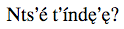
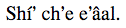
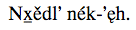
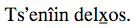
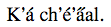
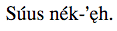
The tone pattern – the sequence of tones on each syllable of each word – is crucial to proper Tanacross pronunciation. There are many examples of tones and tone patterns throughout The Sounds of Tanacross. The sentences below were chosen specifically to illustrate contrasts between different tone patterns.
Click on the Tanacross sentences below to see and hear Mrs. Irene Arnold reciting sentences illustrating a variety of tone patterns. These examples serve to illustrate the richness of the tone system in Tanacross.
In the following examples the tone patterns are indicated above the writing, with the following symbols:
H=High tone, L=Low tone, R=Rising tone, F=Falling tone, X=Extra High tone
The Sounds of Tanacross and other learning materials use tone marking to aid in learning to pronounce Tanacross words correctly. Fluent speakers will have no trouble producing the correct tone without the aid of any tone marking. It is thus perfectly possible and acceptable to write Tanacross without the tone marks.